How to Plumb in an Espresso Machine
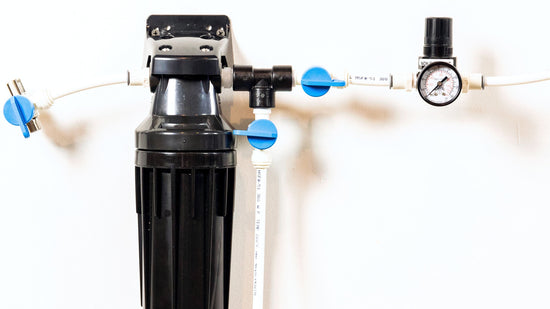
Plumbing in an espresso machine means running a braided stainless-steel supply line from your cold-water shutoff valve (usually under the sink) to the machine's water inlet. Your machine must have a rotary pump and a dedicated inlet port, or this isn't an option. You'll need a tee adapter to split off your cold water line, a braided supply hose with correct fittings, Teflon tape, a dedicated quarter-turn shutoff valve, and, critically, an inline water filter designed specifically for espresso equipment (not a generic carbon filter) that reduces hardness to the 35–85 ppm range. Home water pressure should fall between 30 and 45 PSI; add a pressure-reducing valve if yours runs higher. Run a drain line from the drip tray to your sink drain to make the setup truly hands-off. The perfect kit that includes everything you need (minus draining) is Clive's Home Softening and Filtration System. The most common mistake is skipping proper filtration: unfiltered line water will scale your boiler faster than reservoir water because there's no friction reminding you to think about water quality. If you're unsure whether your machine supports plumbing in, call us at Clive Coffee, and we'll walk you through the right setup for your kitchen.
Plumbing in an espresso machine means connecting it directly to your home's water supply so you never have to fill a reservoir again. It sounds like a luxury, and it is, but it's also a practical upgrade that changes how you use your machine daily. After reading this, you'll know exactly what's required to plumb in a machine, which machines support it, what parts you need, how to handle water filtration and drainage, and where most people go wrong. We've helped hundreds of customers through this process, and the truth is: it's more straightforward than most guides make it sound, but the details matter enormously.
What Plumbing Involves

At its simplest, plumbing in an espresso machine means running a braided water supply line from a cold water source, usually the shutoff valve under your kitchen sink, to a water inlet on the back of the machine. Most plumb-capable espresso machines (check out our plumbable espresso machines) use a standard 3/8" BSP threaded inlet, and you connect to it with a braided stainless steel hose and the appropriate fittings. On the drain side, you either run a small-diameter drain line from the machine's drip tray to a sink drain or a nearby bucket, or you simply keep emptying the drip tray manually.
Here's what you actually need: a plumb-capable espresso machine, a water filtration system rated for espresso, a braided supply line with the correct fittings, a tee adapter to split off your cold water shutoff valve, Teflon tape, and, optionally, a drain line kit. The entire installation can be done by a handy homeowner in an afternoon, though hiring a plumber for the water supply connection is a smart move if you're not comfortable working with water lines. A leak behind your espresso machine is not the kind of surprise anyone wants.
One critical point: plumbing in does not mean you skip water treatment. In fact, it makes proper filtration more important because you're now feeding your machine a continuous supply of whatever comes out of your pipes.
Key Factors That Actually Matter When Plumbing In
1. Machine compatibility. Not every espresso machine can be plumbed in. Entry-level machines and many mid-range models are reservoir-only with no water inlet port. Machines designed for plumbing typically include a rotary pump rather than a vibratory pump, because rotary pumps are engineered to handle continuous water pressure from a direct line without the noise and wear issues vibratory pumps face. Some machines offer both a reservoir and a plumb-in option, giving you flexibility if you move or change your kitchen setup. Before you plan anything, confirm your machine has a dedicated water inlet.
2. Water pressure. Your home's water pressure needs to fall within the machine's acceptable inlet pressure range, typically between 30 and 80 PSI for most plumb-capable home machines. Too little pressure and the machine can't fill its boiler properly. Too much and you risk damaging internal components or causing leaks. If your home water pressure runs high, a simple pressure-reducing valve inline before the machine solves the problem for under $30. You can test your home's water pressure with a basic gauge that threads onto any hose bib.
3. Water filtration and treatment. This is the factor most people underestimate. When you're filling a reservoir, you control exactly what water goes in. When you plumb in, your machine drinks whatever your pipes deliver, all day, every day. Municipal water varies wildly in mineral content, chlorine levels, and hardness. Hard water causes scale buildup inside boilers and heat exchangers, which is the single most common cause of expensive espresso machine repairs.

At Clive, we've put serious thought into water quality and offer solutions for every setup. Third Wave Water Packets - Espresso Profile are the easiest starting point if you're still on a reservoir, letting you build perfectly balanced water from scratch using distilled or RO water. For plumbed machines, we recommend a dedicated inline filtration system that addresses hardness, chlorine, and total dissolved solids. We target the 35-85 ppm range recommended by the Specialty Coffee Association, and we carry water-softening pouches from BWT and Oscar, specifically designed for reservoir-only use. If you're not sure what your local water looks like, we can help you interpret a water report or recommend a test kit. Getting this right before you plumb in is far cheaper than addressing scale damage after the fact.
4. Drain line setup. A plumbed machine fills itself automatically, which means the drip tray can fill up faster than you'd expect, especially if you're pulling multiple shots and steaming milk throughout the day. Many plumb-capable machines offer a drain port on the drip tray that accepts a small-diameter hose. You can run this to a drain under the sink, to a small bucket behind the machine, or directly into the sink's drain line with a barbed tee fitting. A proper drain line turns your machine into a genuinely hands-off setup. Without one, you're still emptying the drip tray regularly, which somewhat defeats the purpose of plumbing in.
5. Counter placement and line routing. Ideally, you want the machine within a few feet of the shutoff valve under your sink. Longer runs are possible, but shorter runs mean fewer potential failure points. Keep the supply line accessible so you can shut off water if you need to service the machine, move it, or leave for an extended vacation. A quarter-turn shutoff valve inline makes this easy and takes ten minutes to install.
Machines We Recommend for Plumbing In
Several machines in our lineup support direct water line connection, and the right one depends on your budget, counter space, and how you make espresso. The LUCCA A53 Direct Plumb is our purpose-built plumbed machine, designed specifically for home baristas who want a seamless countertop setup without reservoir management. It shares the same dual-boiler architecture and PID temperature control as the rest of the A53 line, with a dedicated water inlet and drain port built in from the start, not retrofitted. For the customer who wants the most capable plumbed home machine available, the La Marzocco GS3 benefits significantly from being plumbed in, with its larger boilers and commercial-grade build making full use of a continuous water supply. If you're weighing options or want to talk through what plumbing in would look like for your specific kitchen, give us a call. We'll tell you straight which machines make the most sense and walk you through the installation before you buy anything.
What Most Plumbing Guides Get Wrong
The biggest mistake we see in guides, forums, and YouTube videos is treating plumbing in as purely a convenience upgrade and glossing over water quality. Connecting your espresso machine to an unfiltered water supply is worse than using a reservoir with decent water. At least with a reservoir, you're probably thinking about what you're pouring in. A direct line creates a false sense of "set it and forget it," and six months later you're looking at a scaled-up boiler, reduced flow rates, and a repair bill that dwarfs the cost of a good filtration system.
The second most common mistake is assuming any inline filter is fine. A basic carbon filter removes chlorine taste, but it does almost nothing for hardness or total dissolved solids. You need a filter specifically designed for espresso equipment that inhibits scale. The cost difference between a generic carbon filter and a proper espresso-rated inline filter is maybe $30 to $50, and it's the most cost-effective insurance policy you can buy for a machine you've invested hundreds or thousands of dollars in.
Third: not installing a dedicated shutoff valve for the espresso machine. If your only option is to crawl under the sink and close the main cold water valve every time you need to disconnect the machine, you won't do it. A dedicated quarter-turn ball valve on the line to your machine takes ten minutes to install and saves you real headaches down the road.
Who Should Plumb In and How to Get It Right
If you pull two or more drinks a day and your machine supports a direct water connection, plumbing in is one of the best upgrades you can make. It transforms your espresso routine from a series of small chores into something genuinely seamless. The installation itself is manageable for anyone comfortable with basic plumbing, and it requires just a few affordable parts: a tee adapter, a braided supply line, Teflon tape, and a quality inline water filter designed for espresso.
Invest in proper water filtration from the start, not after you notice your shots tasting flat and your steam pressure dropping. Install a dedicated shutoff valve. Run a drain line if your machine supports it. And if you're not sure whether your current machine can be plumbed in, or you're shopping for one that can, reach out to us. We've walked more home baristas through this process than we can count. We'd rather spend twenty minutes on the phone making sure you get this right than have you discover a fitting mismatch the hard way. Free shipping on orders over $75 covers all the accessories you'll need, and our team can spec out the exact fittings and filtration for your machine so you're not guessing at the hardware store.