Busting Five Espresso Myths
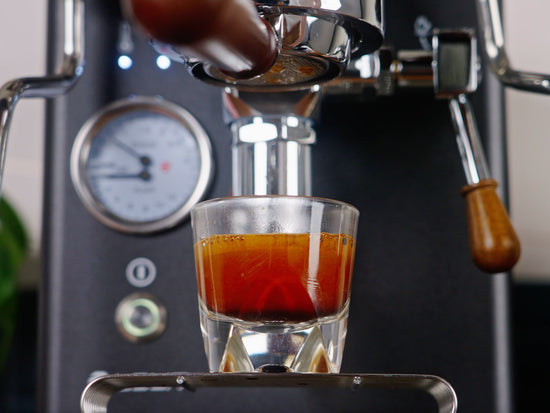
Modern espresso debunks old myths: shots don't die in 30 seconds, any roast works, 9 bars is ideal, crema doesn't equal quality, and consistent tamping beats force.
- Espresso shots don't 'die' after 30 seconds — flavor degradation takes 10–30 minutes, so there's no rush at home
- Any roast level works for espresso with proper dialing in — 'espresso roast' is a marketing term, not a requirement
- Professional machines brew at 9 bars of pressure — higher numbers are often marketing gimmicks on entry-level equipment
- Crema indicates freshness but doesn't guarantee quality — it's bitter on its own and flavor always matters more than foam
- Consistent, level tamping beats excessive force — stop when you meet resistance, whether that's 15 or 30 pounds
If you’re a newbie to the espresso world, welcome! And also, our condolences. For all of its delicious rewards and abject cruelties, it's truly our world. For every shot of silky, caramel-bodied perfection, there are dark corners of the internet (or café counter) still clinging to old espresso superstitions, some of which never made any sense to begin with.
Whether born from tradition, intuition, or even negligent corporate mythmaking, espresso misconceptions have a stubborn way of persisting. So, let’s break them down and talk about the things you really don't need to pay attention to anymore.
Myth #1: Espresso Shots “Die” After 30 Seconds

This one traces back to a familiar green mermaid. [redacted] once trained baristas that espresso shots had to be mixed or served within 30 seconds before they “died.” There’s actually no scientific basis for this claim. Espresso contains volatile compounds that evolve over time, but it takes 10–30 minutes for any real flavor degradation to occur. Even then, milk or syrup won’t “revive” a dead shot; we're not performing CPR. When in doubt, pull another shot.
This myth most likely started as a way to emphasize to baristas to speed up service, especially before [redacted] started using automatic espresso machines, but at home, there’s no rush. Pull your shot, breathe, and enjoy it while it’s hot. There’s no ticking time bomb.
Myth #2: There’s Such a Thing as an Espresso Roast

You’ve seen it on coffee bags before: Espresso Roast. Sounds official, right? In reality, there’s no single roast level that’s inherently meant for espresso.
Historically, espresso was made with darker roasts because they were more forgiving and extracted easily on primitive machines. But with today’s precision grinders and temperature-stable machines, espresso can be made with any roast. Light, medium, or dark, it’s all about dialing in your grind and espresso recipe.
The best espresso is the one that matches your taste.
Myth #3: More Pressure = Better Espresso

Espresso is brewed under intense pressure, so it’s easy to assume that more pressure means more flavor. Machines boasting 14 or 16 bars of pressure are often entry-level models compensating with marketing rather than engineering. In reality, professional and prosumer machines are designed to brew around 9 bars of pressure, because that’s the sweet spot. It's important to note:
- Most machines using vibratory pumps are rated at 15-bar max pressure, which is regulated by an expansion valve to prevent pressure spikes.
- For the pendants or espresso veterans: you don't have to be stuck pulling shots at 9 bar. You can utilize experimental tools like flow control to pull shots at lower pressures.
Pushing more pressure through the puck can lead to channeling and uneven extraction. Think of it like overtightening a bolt: You’re not getting a better seal; you’re just breaking the threads. Gentle, consistent pressure wins every time.
Myth #4: More Crema Means Better Espresso

Crema looks great. Full stop. That's pretty much it. It simply indicates that your coffee is fresh and that CO₂ is still present in the beans.
Beyond that, crema doesn’t reveal anything about roast quality, extraction, or taste. In fact, crema on its own isn’t particularly pleasant; it’s bitter on its own and packed with microfine particles. Next time, try scooping some off with a spoon; you’ll see what we mean.
A rich, beautiful crema might make your espresso look the part, but flavor always wins over foam.
Myth #5: You Must Tamp with 30 Pounds of Pressure

Somewhere along the way, 30 pounds of tamping pressure became espresso dogma. The idea was that more force made a better puck, but the truth is more straightforward: once the coffee bed stops compressing, additional force does nothing. Stop when you meet resistance. Whether you tamp with 15 pounds or 30, what really matters is consistency and levelness. Uneven tamping leads to uneven flow, which can cause channeling.
If you’re tired of overthinking tamping, a calibrated or self-leveling tamper can eliminate the guesswork (and wrist strain). Your espresso, and your joints, will thank you.
Final Thoughts
We’re currently living in a new golden age of espresso, which is easy to take for granted. Between better equipment, open-source research, and passionate home baristas, there’s more accurate information available than ever before.
So take your time, question old habits, and enjoy the process. Espresso doesn’t have to be complicated; it just has to taste good.
Further Reading:
- Five Ways to Fall in Love With Espresso Again
- Making Cafe Quality Drinks at Home
- How to Dial in Your Espresso Grinder
Frequently Asked Questions
Do espresso shots really die after 30 seconds?
No, this is a myth with no scientific basis. Espresso contains volatile compounds that evolve over time, but real flavor degradation takes 10–30 minutes to occur. At home, there's no need to rush — pull your shot and enjoy it while it's hot without worrying about a ticking clock.
What is the best roast level for making espresso at home?
There's no single 'espresso roast' — light, medium, or dark roasts all work for espresso. Historically, darker roasts were used because they were forgiving on older machines, but with modern grinders and temperature-stable espresso machines, any roast can produce excellent espresso when properly dialed in to match your taste preferences.
How much pressure should my espresso machine use?
Professional and prosumer espresso machines are designed to brew at around 9 bars of pressure, which is the sweet spot for extraction. Machines advertising 14 or 16 bars are often entry-level models using marketing rather than engineering. More pressure doesn't mean better espresso — it can actually cause channeling and uneven extraction.
Does more crema mean my espresso is better quality?
No, crema simply indicates fresh coffee with CO₂ still present in the beans. While it looks beautiful, crema doesn't reveal anything about roast quality, extraction, or taste. In fact, crema on its own is quite bitter and packed with microfine particles. Flavor always wins over foam.
How hard should I tamp my espresso puck?
You don't need exactly 30 pounds of pressure — that's espresso dogma. What matters is consistency and levelness. Stop tamping when you meet resistance and the coffee bed stops compressing. Whether you use 15 or 30 pounds, even tamping prevents channeling and produces better extraction than excessive force.