What is Espresso Crema?
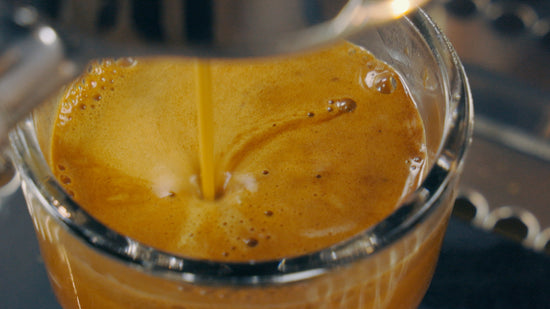
Crema is the golden foam atop espresso, formed when pressurized water forces CO2 from roasted beans into microscopic bubbles—it's visually appealing but not a reliable indicator of shot quality.
- Crema consists primarily of CO2 gas trapped in coffee beans during roasting, released under pressure during extraction
- Dark roasts produce significantly more crema than light roasts due to higher CO2 production during roasting
- Crema amount correlates loosely with freshness but doesn't directly indicate flavor quality—trust your palate over appearance
Crema is a big part of what makes espresso look so delicious and so different from the coffee produced by other brew methods. It’s a term that ties back to the very origins of espresso but what is it and what does it tell you about your shots? Find out in our brief video below.
Today, the term “espresso” is ubiquitous. If you ask for an espresso in a coffee shop just about anywhere in the world, odds are that the barista will understand you and that you’ll get what you expect, or at least something close. That wasn’t always the case. While there are earlier examples of espresso machines that bear that name, espresso as we know it today was first made by Gaggia in the 1940s. Needing a name for this new kind of coffee, Achille Gaggia, the inventor of the modern espresso machine, coined the term “caffé crema” which translates to cream coffee, due to the thick consistency and dense foam that topped the beverage. The name espresso, which predates crema caffé by at least a few decades, was the term that stuck but we still use the word crema to this day to describe that thick foam sitting atop our espresso.
So, what is crema? By volume, it’s mostly carbon dioxide gas. This gas is produced when coffee is roasted, at which point it remains trapped within the cell structure of the beans. When brewing coffee, water is forced to pass through this cell structure to flush out all the flavorful compounds that makeup coffee. In the process, they also end up forcing out carbon dioxide gas. With other brew methods - like pour over - this effect is referred to as a “bloom” as the bed of coffee expands with the expanding gas. In an espresso machine, there’s nowhere for this gas to go. It gets forced through the portafilter basket with the rest of the water and coffee solids. This forms thousands of microscopic bubbles that create the foam we refer to as crema.
Now we know where its name comes from and how it’s formed, but what does it mean? Well, that’s a bit more complicated. If there’s one thing that crema might tell us, it’s how fresh our coffee is. See, after coffee is roasted, the longer it sits around the more CO2 escapes the beans naturally and therefore we see less of a bloom, or less crema, when the coffee gets hit with water. In much the same way, a shot pulled with coffee that is too coarse will produce less crema as a byproduct of being under-extracted. Aside from being a unique characteristic of espresso, these connections are a big part of why crema has such a grip on the minds of baristas and coffee lovers alike. Little or no crema means stale or poorly extracted coffee…or does it?
There are a few other things to keep in mind – first and foremost: roast. The more you roast a coffee the more CO2 will be produced in the process. This means that a very dark roasted coffee will inherently produce significantly more crema than a light roasted one. Further, shots pulled with a larger proportion of water to coffee will generally produce less crema than those that use less water. This isn’t directly related to extraction, but is a byproduct of using a coarser grind. Potentially most important is the fact that while CO2 levels inside your coffee bean bear some correlation to freshness and therefore flavor – it’s just that: a correlation. The lack of CO2 has no direct connection to the flavor compounds in your coffee. It’s entirely possible to find a peculiar coffee from a specific origin that produces little to no crema a week after roast but tastes wonderful.
Crema may be a pretty and pleasant attribute of espresso, but you’re far better off trusting your tongue than your eyes when it comes down to it.
Sources:
- The Cappuccino Conquests. The Transnational History of Italian Coffee (2007)
- 1948 Gaggia Gilda Design Study
- What is the origin of the word espresso?
Frequently Asked Questions
What causes espresso crema to form?
Crema forms when high-pressure water forces CO2 gas—trapped inside coffee beans during roasting—through the portafilter basket along with coffee oils and solids. This creates thousands of microscopic bubbles that sit atop your espresso as a thick, golden foam.
Does more crema mean better espresso?
Not necessarily. While abundant crema can indicate fresh coffee, it's more influenced by roast level (darker roasts produce more), grind size, and brew ratio. Some exceptional light-roasted coffees produce minimal crema but taste delicious—flavor should be your primary quality indicator.
Why does my espresso have no crema?
Lack of crema typically indicates stale coffee, under-extraction from too-coarse grinding, or very light roasted beans with lower CO2 content. However, some single-origin coffees naturally produce less crema. If your shot tastes good, don't worry about thin crema.
How did espresso crema get its name?
Achille Gaggia, inventor of the modern espresso machine in the 1940s, coined the term 'caffé crema' (cream coffee) to describe this new beverage's thick, foam-topped consistency. While 'espresso' became the standard name, we still use 'crema' for the golden layer.