The Importance of Freshly Ground Coffee
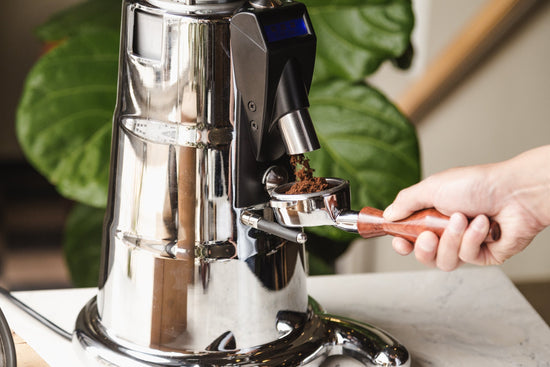
Freshly grinding coffee beans dramatically improves flavor by minimizing oxidation, which begins immediately after grinding and rapidly degrades taste.
- Grinding increases surface area exponentially, accelerating oxidation and flavor loss within minutes
- Whole beans stay fresh longer due to lower surface-area-to-volume ratio and protective outer layer
- Home grinding lets you control particle size consistency and adjust grind settings for optimal extraction
It’s a question we get asked often by those dipping their toes into the world of coffee, and not unreasonably so! To the uninitiated, a grinder seems burdensome, loud, and costly. So buying pre-ground seems much easier. We spend a lot of time insisting that having your own grinder is important, and even more, helping you choose the right one. But why is the grinder so important?
The biggest reason is freshness. It’s the exact things that make coffee so incredibly delicious that make it so fickle. If you’re here it’s probably because you’ve had great coffee, and then had not-so-great coffee. You experienced the bright, complex flavors of fresh coffee and then the flat, muddy, bitter flavor of poorly made coffee. There are a lot of factors within the recipe that could be contributing to this - improper dosing, the wrong grind size, or even just a dirty machine. But in the end, making great coffee is a lot like baking: if your pie recipe starts with rotten fruit it’s probably not the oven temperature that made you gag.
To roasted coffee, our world is essentially a hellscape. Oxygen and light are its kryptonite. Oxygen, in particular, causes many of the tasty compounds in coffee to alter their chemical bonds, turning into different, less tasty molecules. Exposure to air speeds up the process of coffee “going stale” resulting in that one dimensional, boring flavor you may have experienced before. No coffee, however carefully picked and lovingly roasted, can escape this effect forever. Properly storing whole bean coffee in airtight, vacuum sealed, or nitrogen flushed packaging does wonders to delay these effects, which is why you’ll find many roasters seal their bags so well. So why can’t you do the same with ground coffee? It’s a simple problem of geometry and chemistry.

If you look at a coffee bean with an electron microscope you can see that it’s incredibly porous. This is why we can extract so much from coffee just by running a little water through it. A coffee bean is a large spheroid-like object, so it doesn’t have much surface area in relation to its volume. This means that there is very little air coming into contact with the majority of the mass inside. When you grind the bean you create multitudes of tiny particles with a far greater surface area in relation to their volume. All these incredibly porous particles are far more susceptible to air. Think of the difference in wind resistance between a forest and a single tree. This means these particles will interact with air molecules faster than a whole bean. This ruins your coffee.
By having a grinder in your home and vastly shortening the time between grinding and brewing you stand to massively improve your coffee, regardless of brew method. This is on top of being able to ensure your grounds are of consistent size and adjust that size based on the taste of your coffee. It sounds like a minor difference, but it’s quite literally what makes the difference between the best coffee you’ve ever had, and the worst.
Frequently Asked Questions
Why does pre-ground coffee taste worse than freshly ground?
Grinding dramatically increases coffee's surface area, exposing porous particles to oxygen that rapidly alters flavor compounds. Pre-ground coffee has already been oxidizing for days or weeks, resulting in flat, stale flavors. Freshly ground beans retain vibrant, complex notes because you're brewing within minutes of grinding.
How long does coffee stay fresh after grinding?
Ground coffee begins losing flavor immediately after grinding, with noticeable degradation within 15-30 minutes. While vacuum-sealed pre-ground coffee can maintain some freshness, it will never match beans ground seconds before brewing. Whole beans properly stored in airtight containers stay fresh for 2-4 weeks after roasting.
Is a coffee grinder worth the investment for home espresso?
Absolutely. A quality grinder is as important as your espresso machine because it controls particle size consistency and freshness—the two biggest factors in extraction quality. Without grind size adjustability, you cannot properly dial in espresso. The grinder is where great espresso begins.
What happens to coffee beans when they're exposed to air?
Oxygen causes chemical reactions that alter the delicious flavor compounds in roasted coffee, breaking them down into less desirable molecules. This oxidation process accelerates dramatically after grinding due to increased surface area. Light also contributes to degradation, which is why proper storage in airtight, opaque containers is essential.